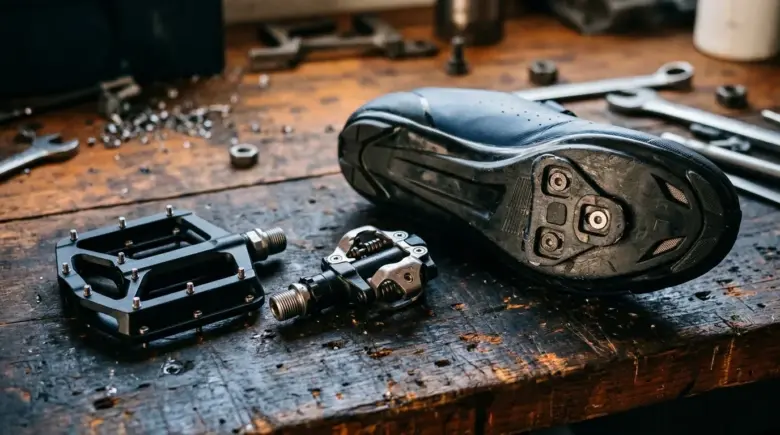
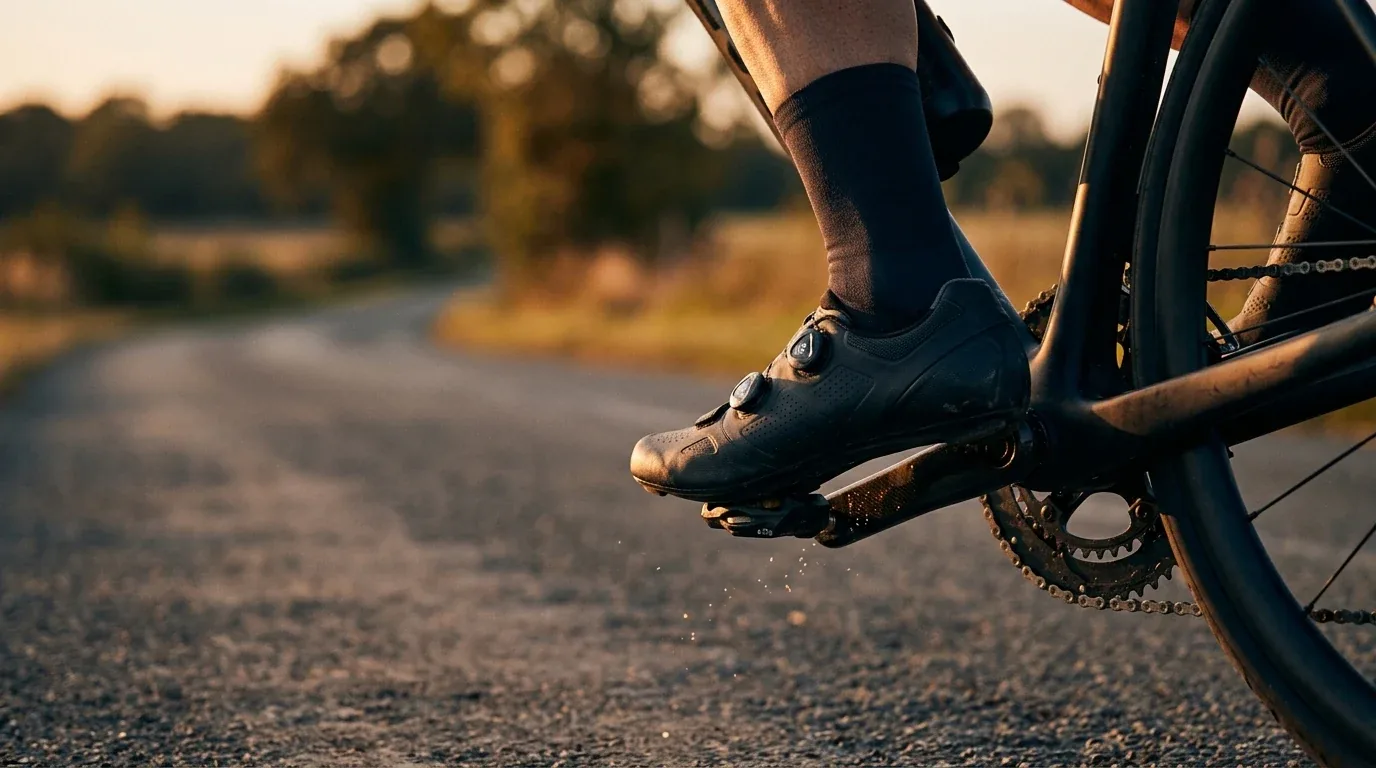
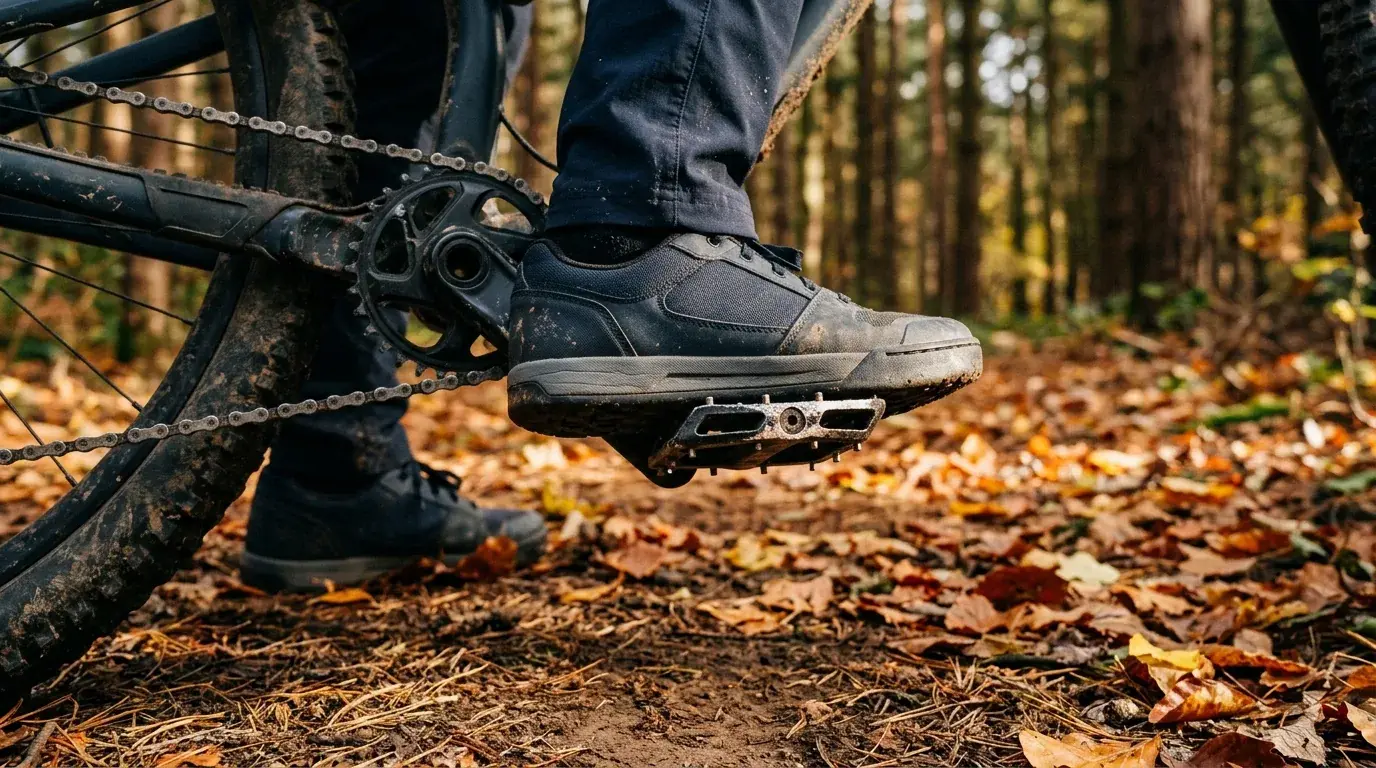
Flat pedals are the better choice for commuting, casual riding, new riders and anyone who wants to ride in normal shoes. Clipless pedals, which lock a cleat on the shoe to the pedal, are better for longer road and gravel rides where a stable, consistent foot position and less wasted effort matter. Many mountain bikers use both, depending on the trail.
Despite the name, “clipless” pedals are the ones you clip into. The name comes from the older toe clips and straps they replaced. Here is how the two systems compare and how to choose.
Side-by-side comparison
| Factor | Flat pedals | Clipless pedals |
|---|---|---|
| Shoes | Any shoes; grippy flat-soled shoes work best | Cycling shoes with cleats |
| Getting on and off | Instant | Twist heel outward to release; needs practice |
| Foot position | Free to move | Fixed by the cleat; must be set up correctly |
| Efficiency | Good | Slightly better, especially at high cadence and on climbs |
| Learning curve | None | Usually a few rides; most riders have one slow tip-over |
| Typical cost | $20 to $100 | $60 to $200 for pedals, plus shoes |
| Best for | Commuting, city riding, beginners, technical trails | Road rides, gravel, endurance, cross-country |
The case for flat pedals
- You can put a foot down instantly in traffic or on tricky terrain.
- You ride in your everyday shoes, which suits errands and commuting.
- Modern flat pedals with pins and soft-soled shoes give a lot of grip.
- They teach good technique on mountain bikes, because you cannot pull up on the pedal.
The case for clipless pedals
- Your foot stays in the same place every pedal stroke, which many riders find more comfortable over long distances.
- No foot slipping off the pedal on bumps or in the wet.
- Stiff cycling shoes spread pressure across the sole, reducing hot spots on long rides.
Two-bolt or three-bolt cleats?
Clipless systems come in two main families. Two-bolt (SPD-style) cleats are small and recessed into the sole, so you can walk normally; they are popular for commuting, touring, gravel and mountain biking. Three-bolt road cleats are larger and give a wide, stable platform, but walking in them is awkward. If you are unsure, two-bolt is the more versatile start.
How to switch to clipless safely
- Set the cleat so the ball of your foot sits over the pedal axle and your foot points naturally.
- Set the release tension to the lowest setting.
- Practice clipping in and out while leaning against a wall, then on grass.
- Unclip early when approaching stops, before you need to put a foot down.
- Increase tension gradually only if your foot releases by accident.
Pedals thread into the cranks in opposite directions on each side. Park Tool’s guide to pedal installation and removal shows which way to turn each one.
Choose flat pedals if…
- You are new to cycling or returning after a long break.
- Most of your riding is short trips in town.
- You want to wear normal shoes.
Choose clipless pedals if…
- You regularly ride more than an hour at a time.
- You ride road or gravel for fitness.
- Your feet slip on flat pedals in wet or rough conditions.
Frequently asked questions
Are clipless pedals dangerous?
They take practice. Most beginners have a low-speed tip-over while learning. Low release tension and early unclipping make the learning period safer.
Do clipless pedals make you faster?
They can make you a little more efficient, especially when climbing or spinning fast, but fit and fitness matter far more than pedal type.
Can I use clipless pedals with regular shoes?
Some pedals are dual-sided, with a flat platform on one side and a clip mechanism on the other, which suits riders who mix commuting and longer rides.
Start simple, upgrade when your rides get longer
Begin with good flat pedals, and move to clipless when your rides become longer and more regular. Pedals are a classic tier-three purchase in our list of what beginners actually need. Make sure your saddle height is right first, as explained in our bike fit and sizing guide.

Carlos Mane is the founder and writer of BigRing Mechanics. He is not a certified mechanic; he is a dedicated cycling researcher who works from manufacturer service manuals, published safety standards and established repair references to turn them into clear, practical guides for everyday riders.