To clean a bike, rinse it with low-pressure water, apply degreaser to the chain and gears and scrub them first, then wash the frame and wheels with bike-specific soap and a soft brush, rinse again, dry everything, and finish by lubricating the chain. A full wash takes about 20 minutes, and you do not need a pressure washer or special stand.
Order matters. Cleaning the drivetrain first keeps black grease from spreading over a frame you have just washed, and drying before lubing stops water from being trapped in the chain. This guide covers the tools, each step, and the parts water should not be pointed at.
How often to wash your bike
| Riding | Full wash | Between washes |
|---|---|---|
| Dry road riding | Every 3 to 4 weeks | Wipe frame, lube chain |
| Commuting in wet weather | Every 1 to 2 weeks | Rinse off road grime after wet rides |
| Winter roads with salt | After every few rides | Rinse the same day |
| Muddy trails | After each muddy ride | Not applicable |
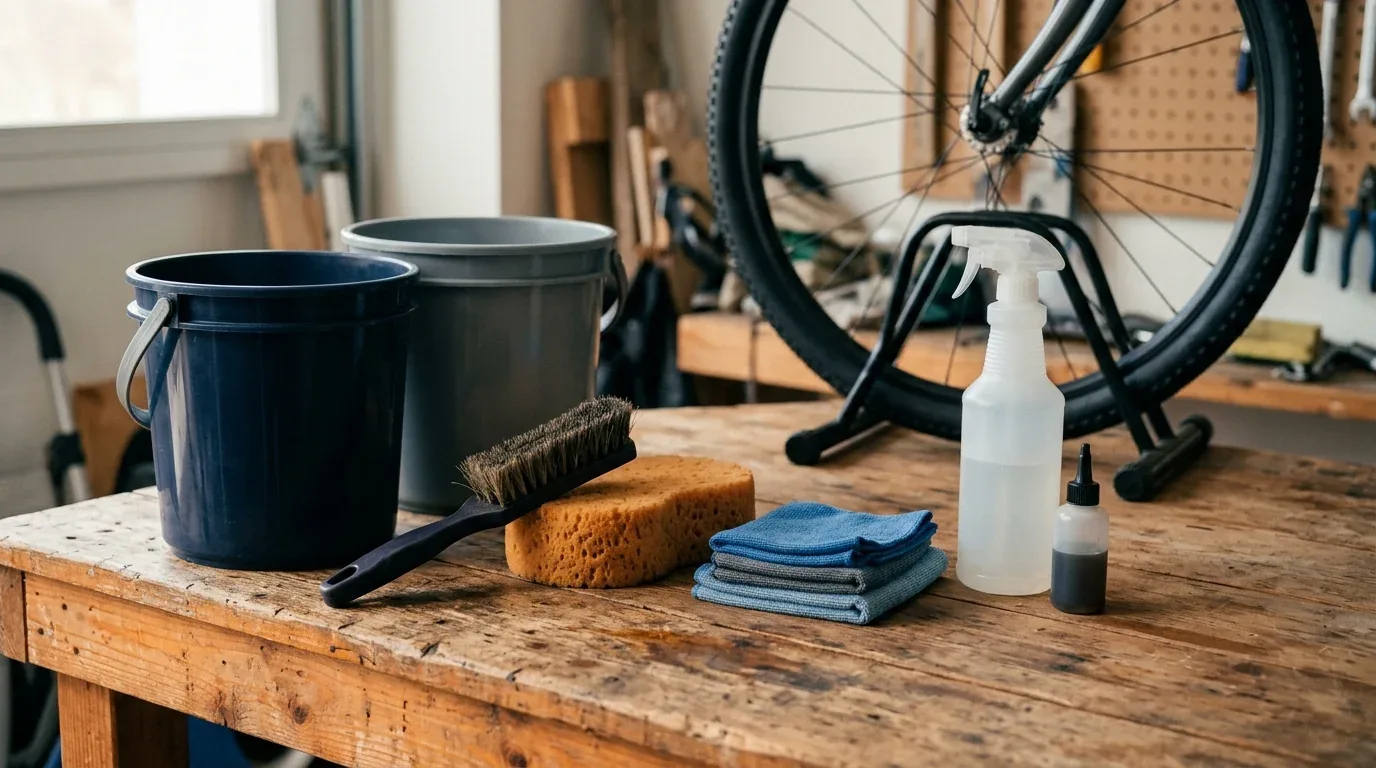
What you need
- Two buckets: one with warm soapy water, one with clean water for rinsing brushes
- Bike-specific cleaner or a mild car-wash soap
- Bike degreaser, preferably biodegradable
- A soft brush or sponge for the frame, a stiff brush for the drivetrain
- Clean rags or microfiber cloths
- Chain lube
- A hose with a gentle spray, or a watering can
Step by step
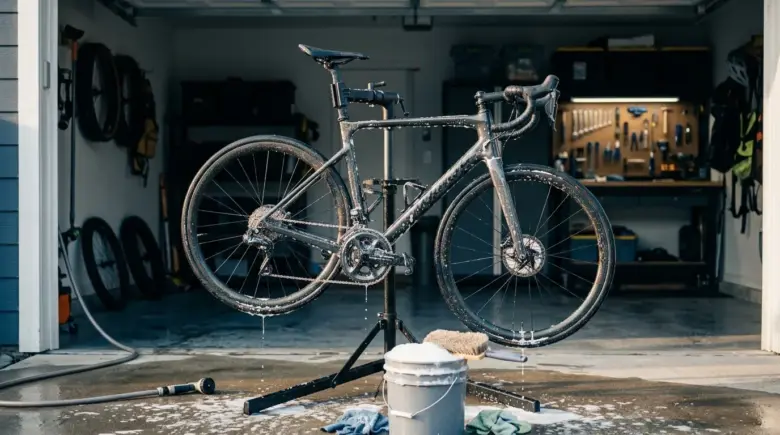
- Set up. Lean the bike against a wall or hang it by the saddle. Remove lights, bags and any electronics. On an e-bike, follow the manufacturer’s advice about the battery and display before washing.
- Pre-rinse. Wet the whole bike with a gentle spray to soften dirt. Keep the water away from the hubs, headset, bottom bracket and suspension seals.
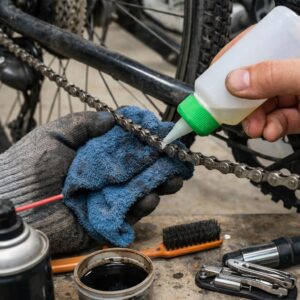
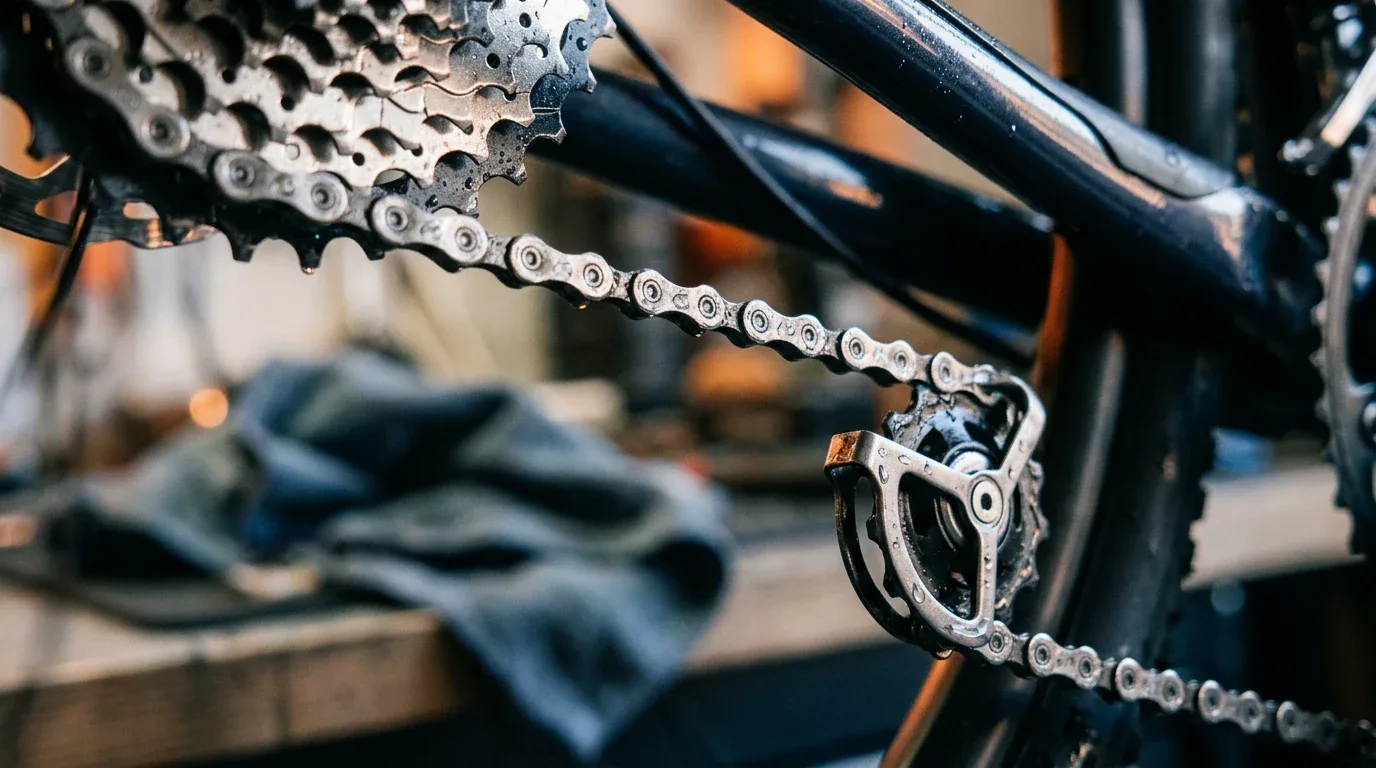
- Degrease the drivetrain. Apply degreaser to the chain, cassette, chainrings and derailleur pulleys. Let it work for a few minutes.
- Scrub the drivetrain. Use the stiff brush between cassette cogs and on the pulley wheels. Backpedal while scrubbing the chain.
- Rinse the drivetrain before moving to the frame, so the dirty degreaser does not spread.
- Wash the frame and wheels. Work from top to bottom with the soft brush and soapy water: bars, top tube, fork, wheels, then the lower frame and the underside of the down tube.
- Clean the brakes gently. Wipe rims or rotors with clean water only. Never let degreaser or lube touch brake pads or rotors.
- Final rinse from top to bottom.
- Dry. Bounce the bike lightly to shake off water, then dry with a cloth, paying extra attention to the chain.
- Lubricate the chain once it is fully dry, then wipe off the excess.
Park Tool’s guide on how to wash a bicycle follows the same order and shows which bearing areas to protect.
Mistakes that damage bikes
- Pressure washers. They force water past bearing seals and wash out grease.
- Degreaser on brakes. Contaminated disc pads usually have to be replaced.
- Household cleaners and dish soap in large amounts. Some contain salts or strip wax and protective coatings.
- Putting the bike away wet, especially with an unlubed chain, which starts to rust within hours.
Use the wash as an inspection
A clean bike shows problems that dirt hides. While drying, look for cracks around welds and joints, frayed cables, worn brake pads and cuts in the tires. This is also a good time to measure chain wear, as explained in our chain cleaning and lubrication guide.
Frequently asked questions
Can I wash my bike with just water?
For light dust, yes. Grease and road grime need soap on the frame and degreaser on the drivetrain.
Is it OK to wash an electric bike?
Most e-bikes handle a gentle wash, but never use a pressure washer, and follow the manufacturer’s instructions on the battery and connectors.
Should I wax my bike after cleaning?
It is optional. A bike polish or protectant helps dirt slide off next time, but keep it away from brake surfaces.
Make cleaning part of your routine
A quick rinse after messy rides and a full wash every few weeks keeps parts working longer and makes problems easy to spot. Fit it into the monthly checks in our home bike maintenance guide, and keep up the two-minute pre-ride checklist in between.

Carlos Mane is the founder and writer of BigRing Mechanics. He is not a certified mechanic; he is a dedicated cycling researcher who works from manufacturer service manuals, published safety standards and established repair references to turn them into clear, practical guides for everyday riders.