A bike chain that skips is usually caused by one of three things: the gear cable tension is slightly off, the chain is worn, or the cassette is worn. Less often it is a stiff chain link, a bent derailleur hanger, or loose parts. If the skipping happens in only one or two gears, start with a barrel adjuster tweak; if it happens under hard pedaling in your most-used gears, suspect wear.
Skipping is not only annoying. When the chain jumps under load your foot can slip off the pedal, which is a real fall risk. Use the symptoms below to narrow down the cause before buying parts.
Diagnose by symptom
| What you notice | Most likely cause | How to confirm |
|---|---|---|
| Skips or clicks in one or two gears, shifts slowly | Cable tension | Turning the barrel adjuster changes it |
| Skips under hard pedaling, often in favorite gears | Worn chain and/or cassette | Chain checker shows wear; teeth look hooked |
| Skips right after fitting a new chain | Worn cassette | Old cogs no longer mesh with the new chain |
| Regular jump once per crank turn | Stiff link | Backpedal slowly and watch the derailleur pulleys |
| Shifting worse after a fall or transport | Bent derailleur hanger | Derailleur pulleys not vertical, viewed from behind |
| Skips and creaks, wheel seems to move | Loose wheel or cassette lockring | Check axle and cassette for play |
Cause 1: Cable tension
Gear cables stretch slightly, especially on new bikes. Shift to a middle gear, pedal, and turn the barrel adjuster on the rear derailleur or shifter a quarter turn at a time: counterclockwise if the chain is slow to climb to bigger cogs, clockwise if it is slow to drop to smaller ones. Park Tool’s rear derailleur adjustment guide covers indexing in detail.
Cause 2: Worn chain
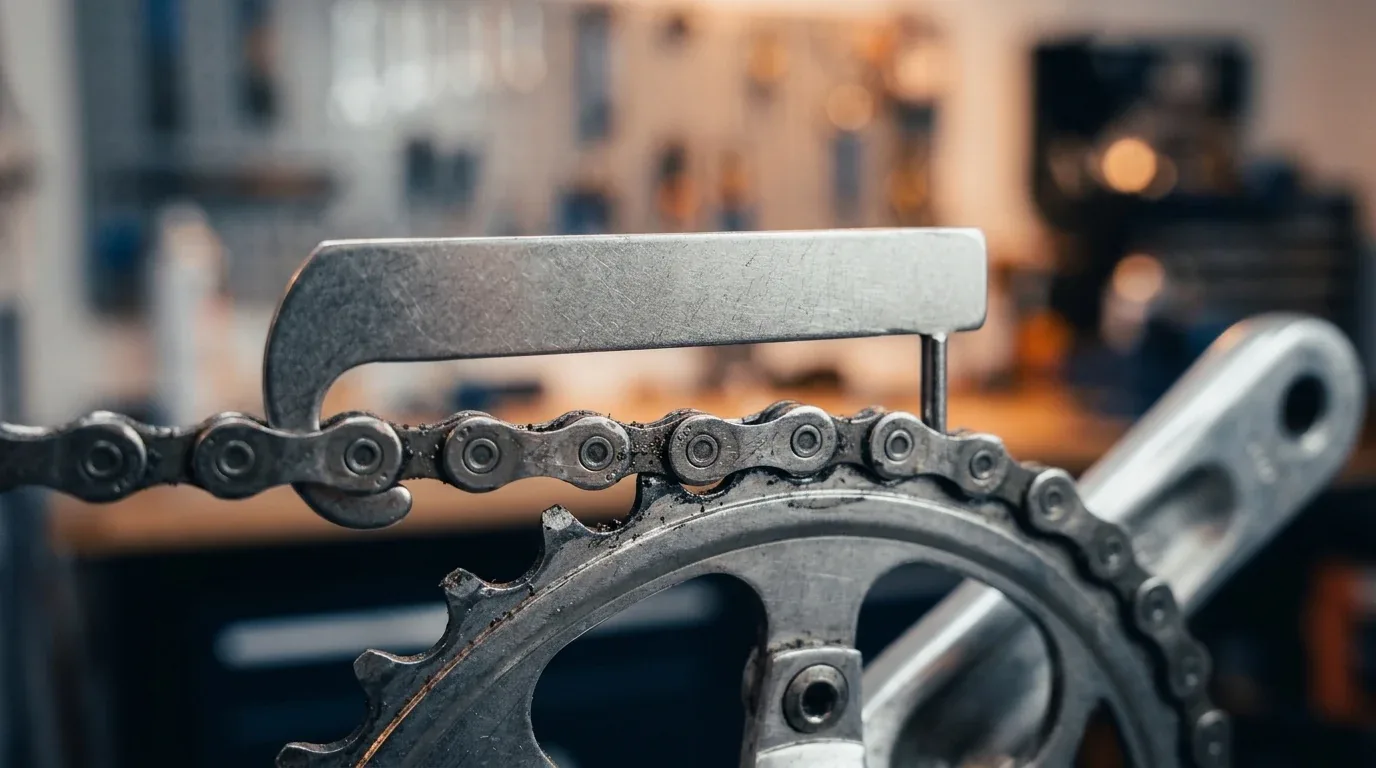
Measure with a chain checker. As a general guideline, replace the chain at around 0.5% wear on 11- and 12-speed systems, and at around 0.75% on bikes with fewer gears. Our chain care guide explains how to slow that wear down.
Cause 3: Worn cassette or chainrings
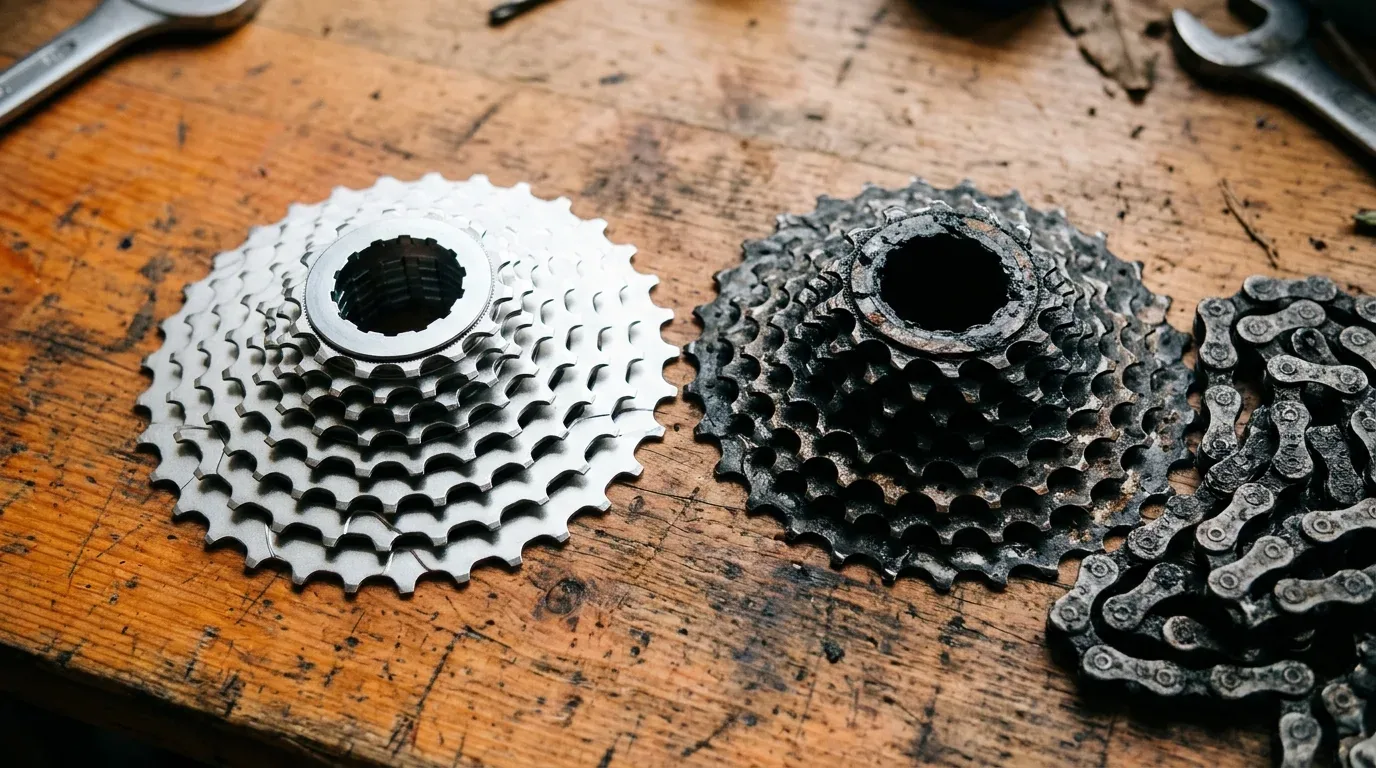
If a new chain skips on certain cogs, those cogs are worn and need replacing. Worn teeth look hooked or shark-finned instead of evenly shaped. This is why replacing chains on time is cheaper: it protects the cassette. Park Tool’s guide to chain replacement on derailleur bikes covers sizing a new chain correctly.
Cause 4: Stiff link
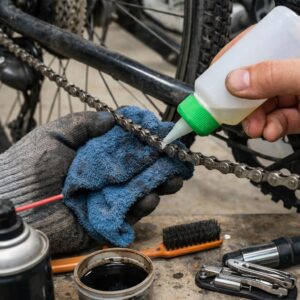
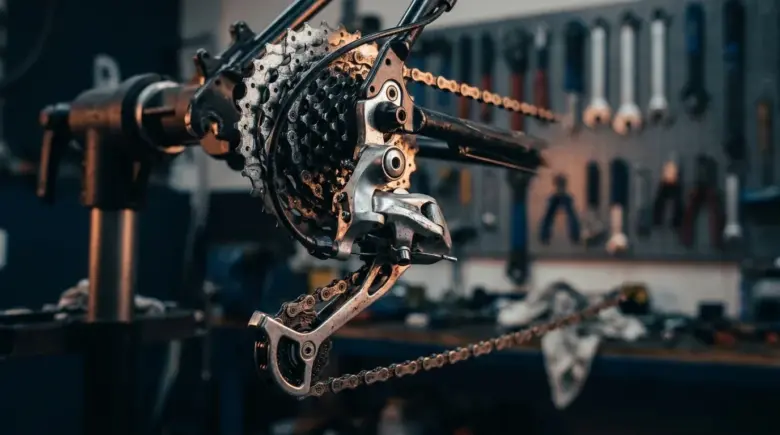
Backpedal slowly and watch the chain pass through the derailleur. A stiff link makes the lower pulley jump. Flex that link gently side to side with your hands, then clean and lube it.
Cause 5: Bent derailleur hanger
The hanger is a small replaceable part that protects the frame in a crash. If it bends, the derailleur sits at an angle and shifting goes wrong across the range. Straightening it needs an alignment tool, so this is often a bike shop job; a replacement hanger is cheap.
Cause 6: Loose parts
Check that the rear wheel is fully seated and the axle is tight, and that the cassette does not wiggle on the hub. A loose cassette lockring needs a specific tool to tighten.
Frequently asked questions
Is it safe to ride with a skipping chain?
It is best not to. A sudden skip under pressure can throw you forward or off the pedal. Fix it before your next ride.
Do I always need a new cassette with a new chain?
No. If you replace chains before they wear too far, one cassette can last through several chains.
How much does fixing a skipping chain cost?
An adjustment costs nothing at home or a small fee at a shop; a chain and cassette cost more. See our maintenance cost breakdown for typical prices.
Fix the cheapest cause first
Work from the simplest fix to the most expensive: barrel adjuster, stiff link, chain wear, then cassette and hanger. If none of these solves it, have a mechanic check the hanger alignment. To prevent the problem in the first place, follow the routine in our home maintenance guide.

Carlos Mane is the founder and writer of BigRing Mechanics. He is not a certified mechanic; he is a dedicated cycling researcher who works from manufacturer service manuals, published safety standards and established repair references to turn them into clear, practical guides for everyday riders.