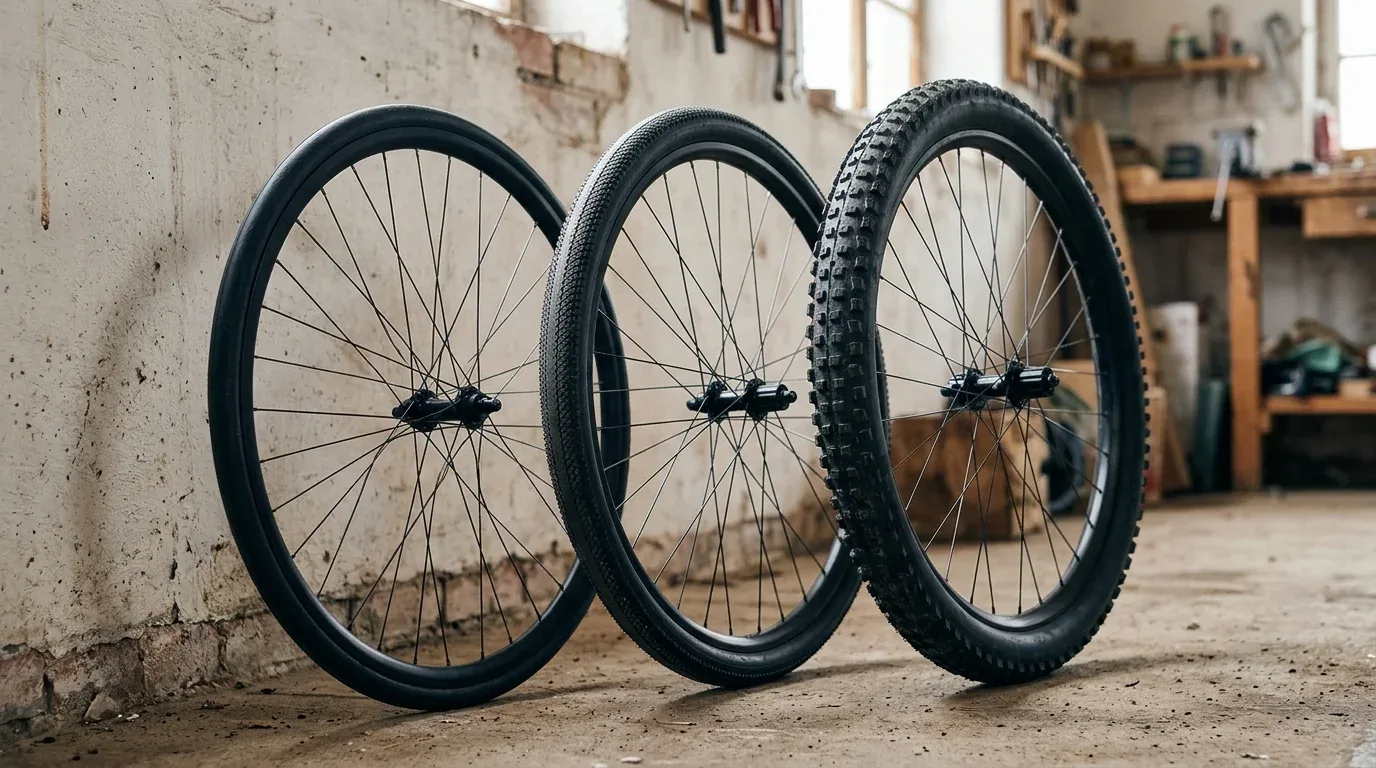
The right bike tire pressure depends mainly on tire width, rider weight and the surface you ride on. As a starting point, narrow road tires usually run around 70 to 90 PSI, hybrid and gravel tires around 40 to 60 PSI, and mountain bike tires around 20 to 30 PSI. Always stay within the minimum and maximum printed on the tire sidewall and on the rim.
Many riders pump to the maximum on the sidewall, assuming harder is faster. In practice, too much pressure makes the bike skittish and uncomfortable on real roads, while too little causes pinch flats and sluggish handling. Here is how to find your number and check it properly.
Starting pressures by tire type
| Tire type and width | Typical starting range | Lighter riders | Heavier riders |
|---|---|---|---|
| Road, 25 mm | 75 to 90 PSI | Lower end | Upper end |
| Road, 28 to 32 mm | 60 to 80 PSI | Lower end | Upper end |
| Hybrid / city, 35 to 45 mm | 45 to 65 PSI | Lower end | Upper end |
| Gravel, 38 to 45 mm | 30 to 45 PSI | Lower end | Upper end |
| Mountain bike, 2.2 to 2.4 in (tubeless) | 20 to 30 PSI | Lower end | Upper end |
| Kids’ bikes | Follow the sidewall | Usually 30 to 50 PSI | |
These are starting points, not exact settings. Always check the range on your tire’s sidewall and any maximum printed on the rim, which can be lower than the tire’s.
What changes the right pressure
Tire width
Wider tires hold more air, so they need less pressure for the same support. That is why a 45 mm hybrid tire feels firm at 50 PSI while a 25 mm road tire needs 80.
Rider and load
Add pressure for heavier riders, panniers or a child seat. Run the rear tire a few PSI higher than the front, because it carries more of your weight.
Surface and weather
Lower pressure gives more grip and comfort on rough roads, gravel and in the rain. Smooth, dry pavement allows slightly higher pressure.
Tubes or tubeless
Tubeless tires can run lower pressure without pinch flats. With inner tubes, going too low risks the tube being pinched against the rim on a pothole.
How to check and inflate
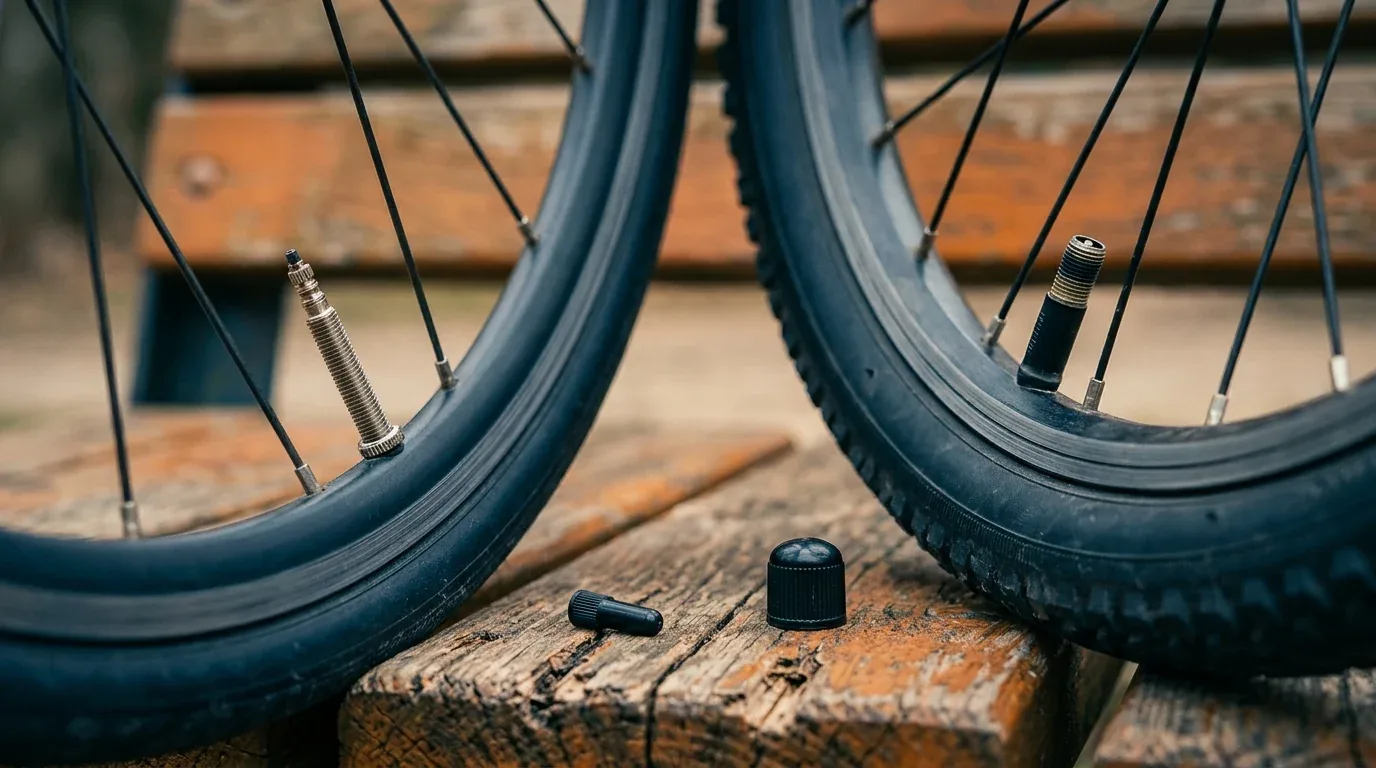
- Identify your valve: Presta (thin, with a small locknut) or Schrader (the same as a car valve).
- On Presta, unscrew the small tip and press it briefly to free it.
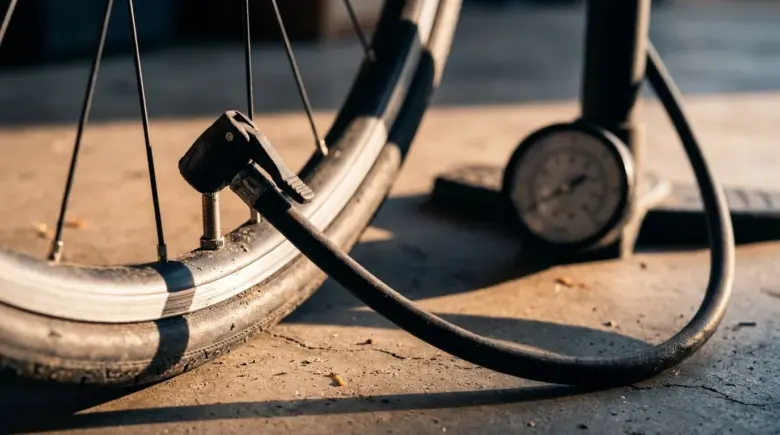
- Attach a floor pump with a gauge and inflate to your target.
- Check pressure when tires are cold, before the ride.
- Close the Presta tip and replace the valve cap.
Tires lose a few PSI per day, so check at least weekly, or before every ride on narrow road tires. It is the first item on our pre-ride checklist.
Signs your pressure is wrong
| Too low | Too high |
|---|---|
| Sluggish, heavy feeling | Harsh, buzzing ride |
| Tire squirms in corners | Bike bounces on rough pavement |
| Pinch flats (two small slits) | Less grip, especially when wet |
| Rim hits the ground on bumps | Faster wear in the center of the tread |
Repeated flats are often a pressure problem. If you keep getting them, read our flat tire repair guide for how to find the cause.
Frequently asked questions
Should I inflate to the max PSI on the tire?
No. The maximum is a safety limit, not a target. Most riders are faster and more comfortable below it.
Why does my tire lose pressure overnight?
All tires lose some air, and narrow, high-pressure tires lose it fastest. A large drop overnight usually means a slow puncture or a loose valve core.
Can I use a gas station air pump?
Only with care, and only on Schrader valves or with an adapter. They inflate fast and can burst a bike tube. A floor pump with a gauge is safer.
Find your number and stick with it
Start from the table, adjust for your weight and roads, and note the pressure that feels best. A floor pump with a gauge is one of the most useful tools you can own; see what else belongs in a starter kit in our guide to cycling accessories for beginners.

Carlos Mane is the founder and writer of BigRing Mechanics. He is not a certified mechanic; he is a dedicated cycling researcher who works from manufacturer service manuals, published safety standards and established repair references to turn them into clear, practical guides for everyday riders.