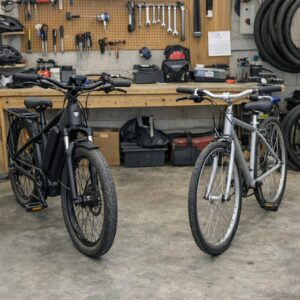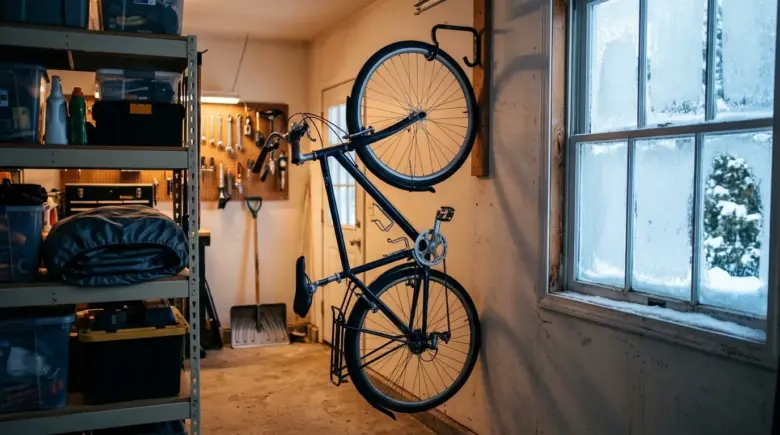
To store a bike for winter, clean it thoroughly, lubricate the chain, keep it somewhere dry and indoors with a stable temperature, hang it or keep the tires inflated so they do not sit flat, and remove e-bike batteries and store them indoors at around half charge. A bike stored this way comes out in spring ready to ride after a quick check.
Bikes rarely wear out from riding in winter storage; they suffer from damp, salt, and being forgotten. Rust on the chain, cracked tires and a dead battery are the usual spring surprises, and all of them are avoidable.
Where to store it
| Location | Pros | Cons | Verdict |
|---|---|---|---|
| Inside your home | Dry, stable temperature, secure | Takes space | Best option |
| Attached garage | Convenient, usually dry | Can be damp and cold; car salt nearby | Good with a cover and wall hook |
| Shed | Out of the house | Condensation, theft risk | Acceptable with a lock, cover and dry floor |
| Outside under a cover | No space needed | Moisture trapped under cover, theft | Avoid if possible |
If the bike must be stored outside or in a shared space, lock it to something solid with a good lock; our bike lock guide covers what to use.
Prepare the bike: step by step
- Wash it. Road salt and grime cause corrosion while the bike sits. Follow a gentle wash with no pressure washer.
- Dry it completely, including inside the chain.
- Lubricate the chain and wipe the excess. A light coat protects against rust. Our chain care guide explains the process.
- Inspect for wear. Note worn pads, tires or a stretched chain now, so you can buy parts over the winter instead of in the spring rush.
- Shift to the smallest cogs front and rear to take tension off the derailleur spring and cables.
- Protect the tires. Hang the bike, or keep tires inflated and check them monthly so they do not sit flat on a cold floor.
- Remove lights and batteries from accessories to avoid leaks.
E-bike batteries need special care
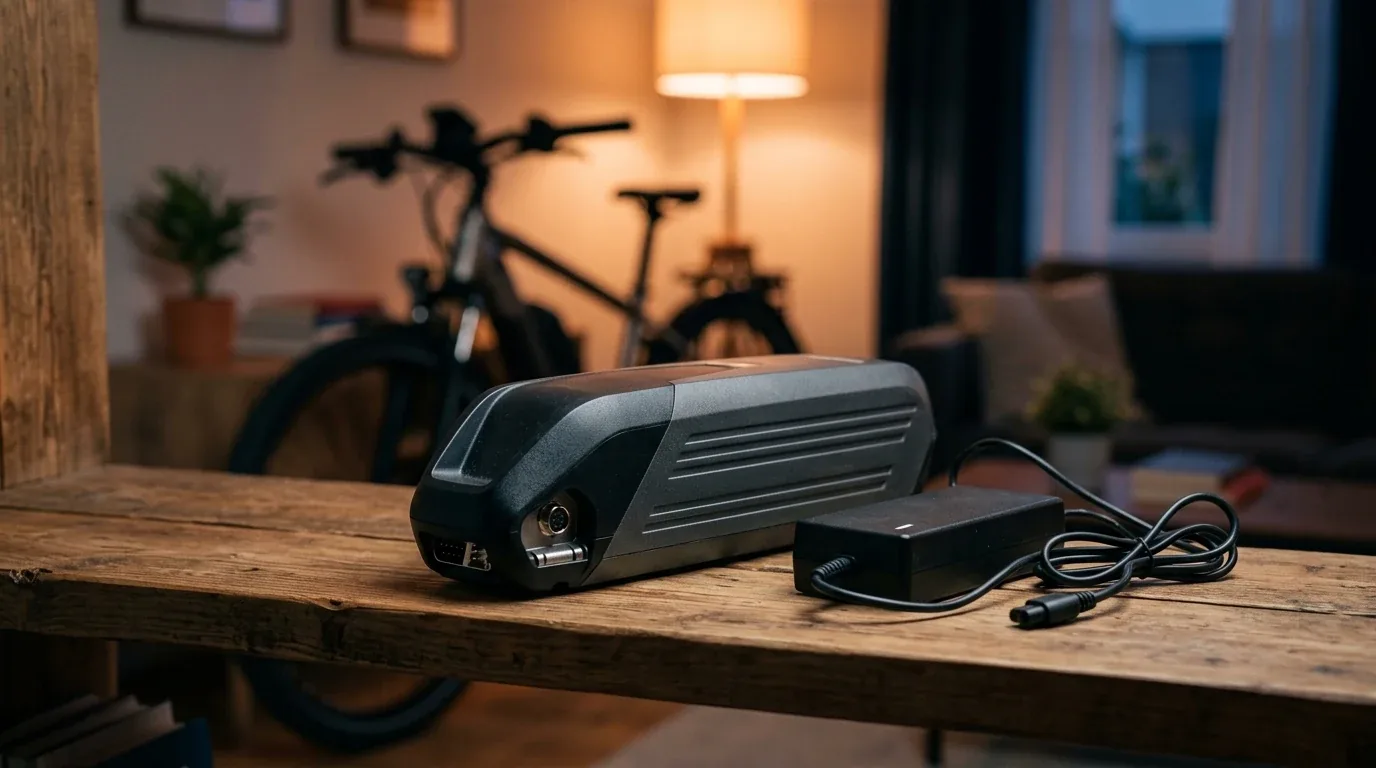
Lithium-ion batteries do not like being stored full, empty, or cold. Most manufacturers recommend removing the battery, storing it indoors at room temperature, and keeping it partly charged, often around 40 to 70 percent. Check the charge every month or two and top it up if it drops. Follow your bike’s manual, since recommendations vary by brand. Store and charge it away from flammable materials.
Hanging and space-saving options
- Wall hooks by the front wheel are cheap and save floor space. Check that your wheel and rim style allows hanging.
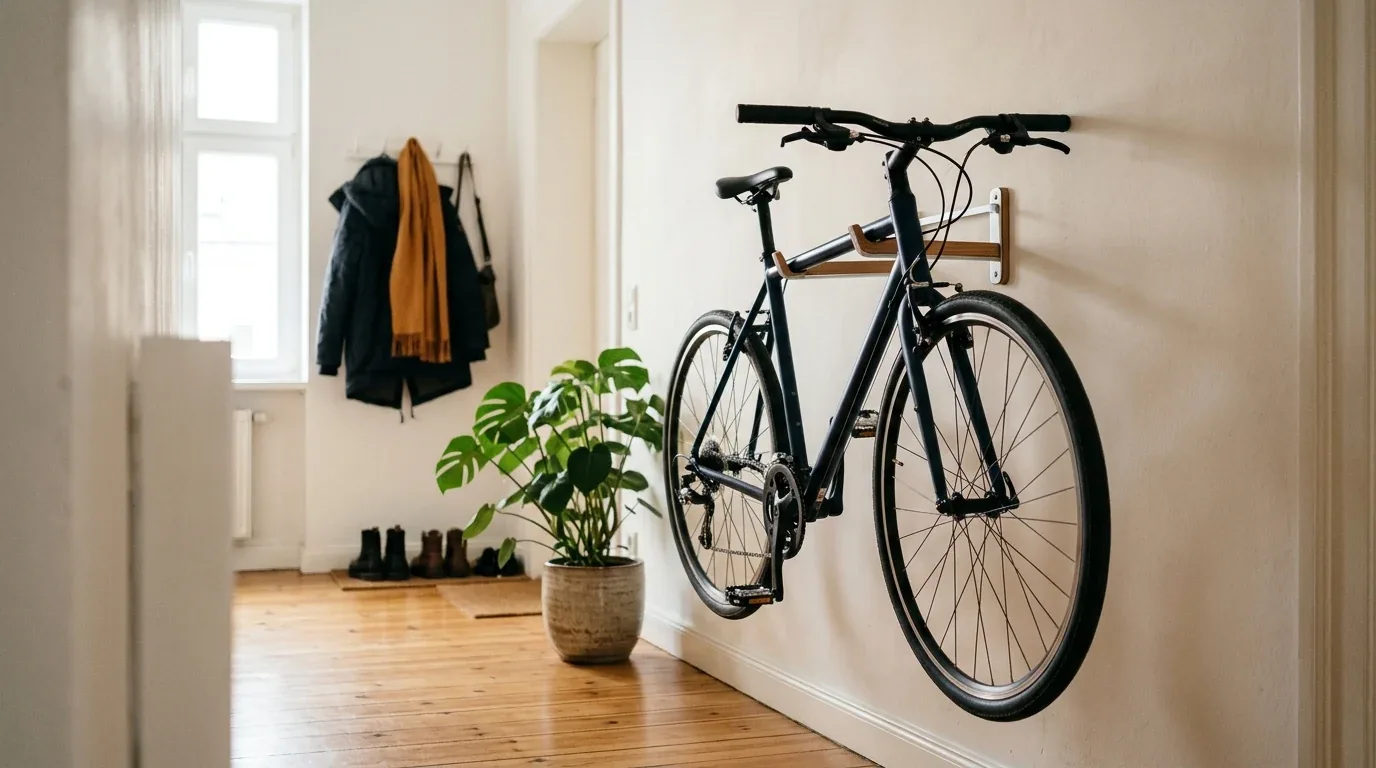
- Horizontal wall mounts hold the frame by the top tube and keep the bike out of the way.
- Freestanding racks work for renters who cannot drill walls.
- Ceiling hoists make use of garage space above the car.
Spring restart checklist
- Inflate tires and inspect sidewalls for cracks.
- Check brakes for firm levers and pad thickness.
- Wipe and re-lube the chain, then shift through all gears.
- Charge the e-bike battery fully before the first ride.
- Run through our full pre-ride tune-up checklist.
Many shops are less busy in winter, which makes it a good time for an annual service. Our maintenance cost breakdown shows what that usually costs.
Frequently asked questions
Is it bad to store a bike in a cold garage?
Cold alone is not the main problem; moisture is. A dry garage is fine for the bike itself. Bring e-bike batteries indoors.
Should I deflate tires for winter storage?
No. Keep them inflated, or hang the bike, so the tires do not develop flat spots or cracks.
Should I cover my bike?
Indoors, a breathable cover keeps dust off. Outdoors, plastic covers can trap condensation, so use a breathable, fitted cover and keep the bike off bare ground.
A little prep now saves a spring repair bill
Clean, lube, store dry, look after the battery, and check everything when you bring it out. If winter is when you are shopping for a new bike instead, start with our road bike vs hybrid comparison.

Carlos Mane is the founder and writer of BigRing Mechanics. He is not a certified mechanic; he is a dedicated cycling researcher who works from manufacturer service manuals, published safety standards and established repair references to turn them into clear, practical guides for everyday riders.