One loose bolt or underinflated tire can turn a perfect ride into a roadside repair.
A quick bicycle tune-up before every ride is the difference between smooth miles and avoidable trouble. It helps you catch small issues-brakes, tires, chain, wheels, and controls-before they become expensive or dangerous.
This checklist focuses on the essential checks every rider should know, whether you commute, train, cruise, or hit the trails. In just a few minutes, you can confirm your bike is safe, efficient, and ready to roll.
Pre-Ride Bicycle Safety Check: Why a Quick Tune-Up Matters
A pre-ride bicycle safety check is not just for long-distance cyclists or expensive road bikes. A two-minute inspection can catch loose bolts, worn brake pads, low tire pressure, or a stretched chain before they turn into a costly bike repair service or, worse, a crash.
In real use, small problems usually show up under pressure. For example, a commuter may not notice a soft rear tire in the garage, but once they hit a pothole with a laptop bag on the rack, that low pressure can cause a pinch flat or damage the rim.
Focus on the parts that affect control, stopping, and drivetrain efficiency:
- Tires: Check pressure with a floor pump gauge or a digital tire pressure gauge, and look for cuts, glass, or sidewall cracks.
- Brakes: Squeeze both levers firmly and make sure the pads contact the rim or rotor evenly without rubbing.
- Chain and bolts: Listen for dry chain noise and quickly check key fasteners with a quality tool like a Park Tool torque wrench.
This quick tune-up also helps you plan maintenance costs more intelligently. If your brakes feel weak or shifting becomes inconsistent, it may be time for a professional bicycle tune-up rather than waiting until you need emergency repairs, replacement parts, or roadside assistance.
Think of it as preventive maintenance for your safety and your wallet. The best bike accessories and cycling gear cannot compensate for a loose wheel, underinflated tire, or brake system that was never checked before the ride.
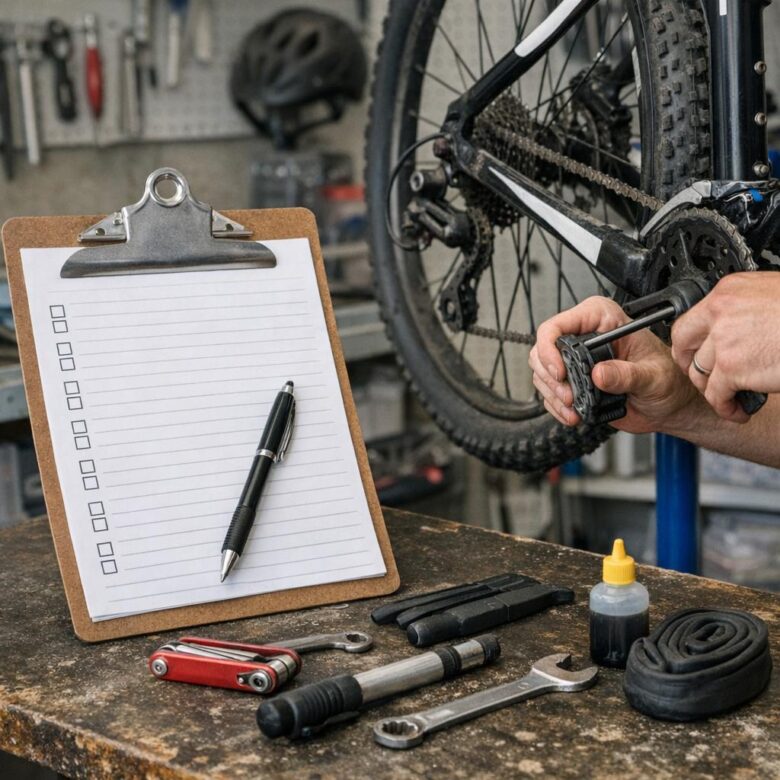
Step-by-Step Bike Tune-Up Checklist: Tires, Brakes, Chain, Gears, and Bolts
Start with the tires because they affect safety, speed, and comfort immediately. Check tire pressure with a reliable gauge, such as the Topeak SmartGauge D2, and inflate to the PSI range printed on the sidewall, adjusting slightly lower for rough roads or gravel. Look for glass, sidewall cracks, worn tread, or slow leaks before they turn into a roadside repair.
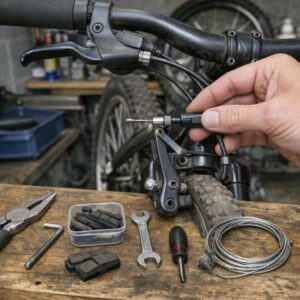
Next, test the brakes while standing beside the bike. Squeeze each lever firmly; the pads should contact the rim or rotor quickly, without the lever touching the handlebar. If you hear scraping, feel pulsing, or notice weak stopping power, inspect pad wear and consider a professional hydraulic disc brake service instead of guessing.
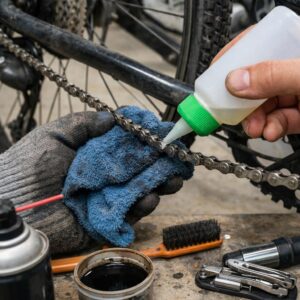
- Chain: Wipe it clean, apply bike chain lubricant, and check stretch with a chain checker to avoid costly cassette replacement.
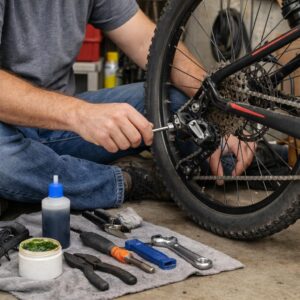
- Gears: Shift through every gear while pedaling lightly; hesitation often means the derailleur needs cable tension adjustment.
- Bolts: Check stem, seatpost, crank, rack, and bottle cage bolts with a torque wrench, especially on carbon frames.
A real-world example: if your rear derailleur skips only under pressure on a hill, the issue is often a worn chain or slightly misaligned hanger, not “bad gears.” Using a basic bike repair stand makes this check faster and cleaner, and it can reduce bicycle maintenance cost over time by catching problems before a full tune-up service is needed.
Common Pre-Ride Maintenance Mistakes That Lead to Flats, Poor Shifting, and Unsafe Braking
One of the most common mistakes is checking tire pressure by squeezing the tire with your hand. A road tire can feel “firm” and still be 20 psi too low, which increases pinch-flat risk and makes the bike feel sluggish. Use a floor pump with a gauge or a dedicated tire pressure gauge, especially before longer rides or commuting with a loaded backpack.
Another issue is over-lubing the chain right before riding. Excess chain lube attracts grit, wears the drivetrain faster, and can cause noisy shifting that feels like a derailleur adjustment problem. Apply lube sparingly, let it sit, then wipe the chain until the outside looks almost dry.
- Park Tool tire levers and a quality mini pump are worth carrying, but they do not replace checking pressure at home.
- A small torque wrench helps prevent overtightened stem, seatpost, and brake bolts, which can lead to expensive bicycle repair service costs.
- Ignoring brake pad wear can turn a simple pad replacement into a rotor replacement on disc brake bikes.
Poor shifting often comes from skipping a quick visual check of the derailleur hanger, cable tension, and cassette cleanliness. I’ve seen riders blame the shifter when the real problem was a slightly bent hanger after the bike tipped over in a garage. If the chain hesitates under load, avoid forcing shifts until you inspect it.
For braking, do not assume “the levers feel fine” means the system is safe. Check pad contact, rotor rub, cable fray, or hydraulic brake fluid leaks before every ride. A two-minute inspection can prevent a flat tire, missed shift, or brake failure when traffic, hills, or wet roads leave no room for guessing.
Key Takeaways & Next Steps
A good pre-ride check is less about perfection and more about confidence. If something feels loose, sounds unusual, or affects braking, shifting, steering, or tire pressure, fix it before you ride-not halfway through the route.
- Ride if: the bike feels secure, brakes respond well, tires are firm, and controls work smoothly.
- Pause if: you notice wobble, rubbing, weak braking, soft tires, or unfamiliar noises.
- Get help if: the issue involves bearings, cables, drivetrain wear, or anything you cannot confidently adjust.
A few minutes of checking can prevent repairs, delays, and unsafe rides.

Dr. Sterling Brooks is a Doctor of Mechanical Engineering (PhD) and a high-performance cycling consultant. He specializes in bicycle kinematics and structural integrity, applying advanced engineering principles to simplify complex bike maintenance. His mission is to provide cyclists with the technical expertise needed to ensure their gear is as efficient and reliable as the athletes who ride them.