Most bike lights make you visible-far fewer help you ride safely in the dark.
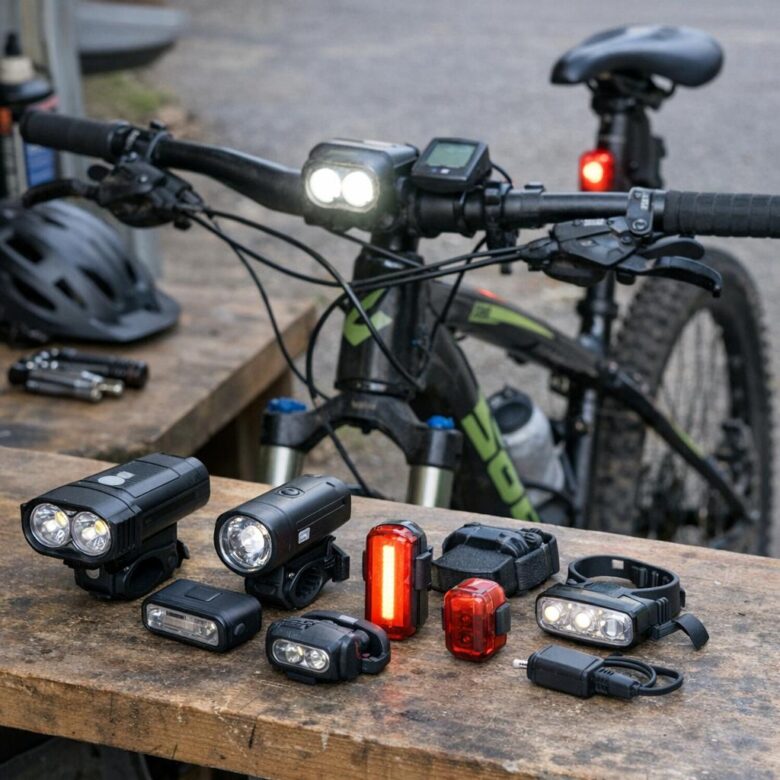
For night riding, the right light is not just about maximum lumens; it’s about beam shape, runtime, mounting security, weather resistance, and whether drivers can spot you from the side.
A great front light helps you read the road before it surprises you, while a reliable rear light makes your movements obvious to traffic behind you.
Before buying, you need to know what actually matters for your route, speed, and riding conditions-because the best bike light for a city commute is not always the best one for unlit roads or trail riding.
Bike Light Basics: Lumens, Beam Patterns, and Why Visibility Matters at Night
Lumens tell you how much light a bike light can produce, but they do not tell the whole story. For city commuting under streetlights, a front bike light around 300-600 lumens is often enough, while dark rural roads or fast road cycling may call for 800-1,200+ lumens. More power usually means higher cost, shorter battery life, and more heat, so the best bike light is not always the brightest one.
Beam pattern matters just as much as brightness. A narrow spotlight can reach far down the road, but it may leave potholes, gravel, or curb edges hidden at the sides. A wide, controlled beam is better for night riding because it lights the road surface without blinding drivers, pedestrians, or other cyclists.
- Commuting: choose a steady front light with side visibility and a flashing rear light.
- Trail riding: use a helmet light plus a handlebar light for better cornering and obstacle detection.
- Road cycling: look for USB-C rechargeable bike lights with long runtime and multiple beam modes.
In real-world use, I have found that a properly angled 700-lumen light can feel safer than a cheap 1,500-lumen model with a harsh, scattered beam. Before buying, check runtime claims, waterproof rating, mount quality, and replacement battery cost. Tools like Strava can also help you review your regular night routes and decide whether you need visibility for traffic, unlit roads, or mixed conditions.
How to Choose Front and Rear Bike Lights for Your Riding Conditions
Start with where you ride, not just the highest lumen number on the box. For dark rural roads or unlit bike paths, a front bike light in the 700-1,200 lumen range with a focused beam helps you see potholes, debris, and road edges; for city commuting, 300-600 lumens is often enough if the beam has good side visibility.
Rear bike lights are about being noticed early, especially by drivers approaching from behind. A bright flashing mode is useful in daylight traffic, but at night a steady or pulsing mode is usually less distracting and easier for drivers to judge distance.
- Urban commuting: choose USB-C rechargeable bike lights, side cutouts, and quick-release mounts for theft prevention.
- Road cycling: look for long battery life, aero-friendly mounts, and compatibility with Garmin Varia or similar radar rear lights.
- Trail riding: use a powerful handlebar light plus a helmet light to see around corners and technical terrain.
In real-world commuting, I’ve found that a medium beam aimed slightly downward is safer than blasting full power into traffic. It lights your lane without annoying drivers, pedestrians, or other cyclists.
Check the battery runtime at the brightness level you’ll actually use, not the lowest eco mode advertised. Also consider waterproof ratings, replacement mount cost, charging cable type, and whether the light remembers your last setting-small details that matter when you ride several nights a week.
Common Bike Light Buying Mistakes That Reduce Safety and Battery Life
One of the biggest mistakes is buying a bike light based only on the lumen rating. A 1,200-lumen front bike light may sound safer, but if it has a poor beam pattern, it can blind drivers while leaving potholes and road edges poorly lit. For city commuting, a controlled beam with side visibility is often more useful than raw brightness.
Another common issue is ignoring battery runtime at the brightness level you actually use. Many rechargeable bike lights advertise long battery life, but that figure is often based on low or flashing mode. If your 45-minute night ride requires steady high output, check real runtime reviews on platforms like REI or manufacturer specifications before buying.
- Choosing the wrong mount: A loose handlebar mount can shift on rough roads, pointing the beam into traffic or down at your front tire.
- Skipping water resistance: For wet commutes, look for an IPX rating instead of assuming the light is weatherproof.
- Using only a front light: A rear bike light with a visible flash pattern is essential for drivers approaching from behind.
I’ve seen riders spend more on a premium cycling light set and still struggle because they forget USB-C charging compatibility or carry no backup light. That becomes a real problem on winter commutes when cold temperatures reduce battery performance. A compact secondary LED bike light in your bag costs less than most repair tools and can prevent a dangerous ride home.
Before buying, compare charging time, replacement mount cost, warranty coverage, and battery indicator quality. These small details affect daily convenience, long-term value, and night riding safety more than the brightest number printed on the box.
Summary of Recommendations
The best bike light is the one that matches your riding conditions, not just the brightest option on the shelf. For dark roads, prioritize dependable beam distance and battery life; for city riding, visibility from multiple angles matters just as much.
Before buying, ask yourself:
- Will I be riding mostly on lit streets or unlit routes?
- Do I need a light for seeing, being seen, or both?
- Can the mount, runtime, and charging setup handle my routine?
Choose a light you trust enough to use every ride-because consistency is what keeps night cycling safe.

Dr. Sterling Brooks is a Doctor of Mechanical Engineering (PhD) and a high-performance cycling consultant. He specializes in bicycle kinematics and structural integrity, applying advanced engineering principles to simplify complex bike maintenance. His mission is to provide cyclists with the technical expertise needed to ensure their gear is as efficient and reliable as the athletes who ride them.