Is your bike helping your lifestyle-or quietly limiting it?
Choosing between an electric bike and a regular bike is not just about speed or price. It affects how far you ride, how often you commute, how much effort you want to spend, and whether cycling feels like freedom or another chore.
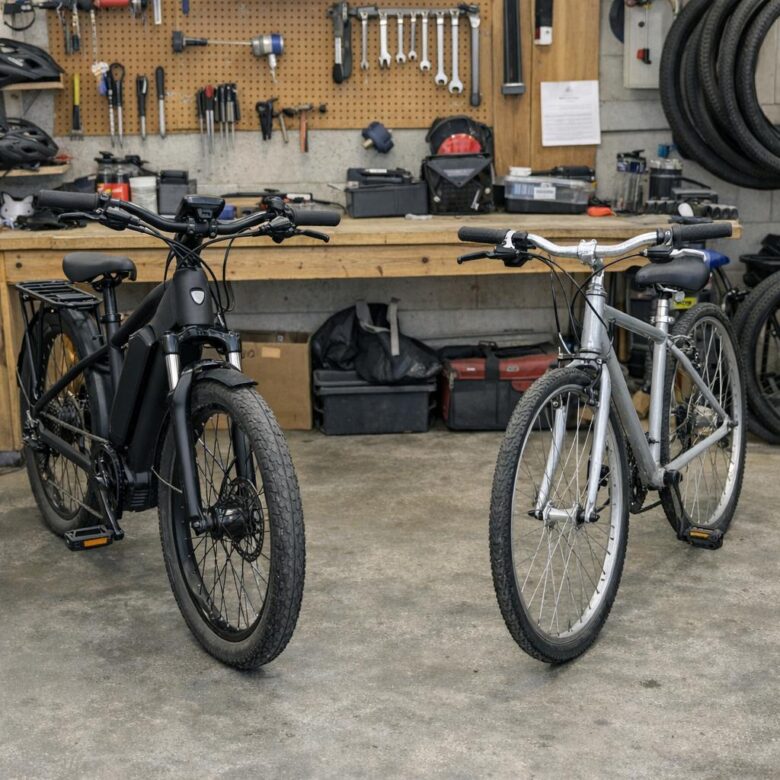
A regular bike offers simplicity, fitness, and low maintenance. An electric bike adds assisted power, easier hills, longer range, and a more practical option for daily transportation.
The better choice depends on your routine, budget, health goals, terrain, and how you actually plan to ride. This guide breaks down the real-world differences so you can choose the bike that fits your life-not someone else’s idea of cycling.
Electric Bike vs Regular Bike: Core Differences in Cost, Effort, Speed, and Maintenance
The biggest difference between an electric bike and a regular bike is how much help you get for the money you spend. A regular bike usually has a lower upfront cost, cheaper replacement parts, and simpler bike maintenance, while an electric bike adds a motor, battery, controller, display, and charging equipment to the total ownership cost.
Effort is where e-bikes clearly stand out. If you commute 8 miles to work, an electric commuter bike can help you arrive without being drenched in sweat, especially on hills or in hot weather. A regular bicycle gives you a stronger fitness workout, but it also demands more energy, planning, and recovery time.
- Cost: Regular bikes are cheaper to buy and repair; e-bikes cost more but may reduce fuel, parking, rideshare, or public transport expenses.
- Speed: E-bikes help maintain a steady pace, especially in stop-and-go city traffic; regular bikes depend fully on rider fitness and terrain.
- Maintenance: Regular bikes need basic tune-ups, while e-bikes may require battery care, firmware updates, brake upgrades, and electrical diagnostics.
For tracking rides, battery range, and commuting habits, tools like Strava or the Bosch eBike Flow app can be genuinely useful. In real use, I’ve seen riders underestimate maintenance on e-bikes: heavier weight means brake pads and tires often wear faster than expected. That doesn’t make e-bikes a bad choice, but it does mean you should budget for quality locks, insurance, battery replacement, and professional service if reliability matters.
How to Choose Between an E-Bike and a Regular Bike Based on Your Commute, Fitness Goals, and Terrain
Start with your commute distance and how often you need to arrive fresh. If your daily route is more than 5-7 miles, includes stop-and-go traffic, or you carry a laptop bag, groceries, or child seat, an electric bike is usually the more practical commuter bike because pedal assist reduces fatigue and helps you keep a steady pace.
A regular bike makes more sense if your ride is short, mostly flat, and your main goal is fitness. You’ll spend less on maintenance, avoid battery replacement costs, and get a more consistent workout, especially if you track rides with Strava or a Garmin fitness device.
- Choose an e-bike if you face hills, headwinds, long distances, or want a car alternative for commuting costs.
- Choose a regular bike if you want lower upfront cost, simple repairs, and maximum exercise benefit.
- Test both on your actual route if possible, not just in a parking lot.
Terrain matters more than many buyers expect. A rider commuting from a hilly suburb to an office downtown may enjoy cycling at first, then stop after a few sweaty mornings; in that case, an e-bike can keep the habit sustainable. On the other hand, a flat 3-mile ride to campus or work is often better served by a lightweight hybrid bike.
Also consider storage, insurance, charging access, and local bike repair service. The best choice is not the “better” bike overall-it’s the one you’ll actually use three to five days a week.
Common Buying Mistakes: When an Electric Bike Is Overkill-and When a Regular Bike Falls Short
One common mistake is buying an electric bike when the real problem is poor route planning, not fitness or distance. If your daily ride is flat, under 3 miles, and you only carry a backpack, a quality regular bike with puncture-resistant tires may be cheaper to own, easier to maintain, and less stressful to lock outside.
An e-bike becomes overkill when buyers ignore the full cost: battery replacement cost, electric bike insurance, theft protection, charger storage, brake wear, and professional maintenance. I’ve seen casual weekend riders spend heavily on a high-torque commuter e-bike, then use the lowest assist mode because the bike felt too heavy to handle in apartment stairs.
On the other hand, a regular bike falls short when your lifestyle adds friction every day. If you arrive sweaty before work, avoid errands because of hills, or need to carry groceries, a pedal-assist electric bike can turn cycling from a “maybe” into reliable transportation.
- Use Google Maps cycling directions to check hills, traffic stress, and realistic commute time before choosing.
- Price the total ownership cost, including locks, lights, helmet, battery care, tune-ups, and possible financing.
- Test ride with your real load: laptop bag, child seat, groceries, or work gear.
A practical example: a parent doing school drop-off plus a 7-mile commute may get real value from a cargo e-bike, while a student riding across campus may be better served by a lightweight hybrid bike. The best choice is not the most advanced device; it is the bike that removes your daily excuses without creating new costs or storage problems.
The Bottom Line on Electric Bike vs Regular Bike: Which One Is Better for Your Lifestyle?
The better choice is the one you’ll ride consistently. Choose an electric bike if you want to replace car trips, handle hills, commute without arriving exhausted, or ride farther with less strain. Choose a regular bike if you value simplicity, lower cost, lighter weight, and a more traditional workout.
Before buying, be honest about your routes, fitness level, storage space, budget, and how often you’ll ride. The smartest option isn’t always the most advanced one-it’s the bike that fits naturally into your daily life and makes riding easier to say yes to.

Dr. Sterling Brooks is a Doctor of Mechanical Engineering (PhD) and a high-performance cycling consultant. He specializes in bicycle kinematics and structural integrity, applying advanced engineering principles to simplify complex bike maintenance. His mission is to provide cyclists with the technical expertise needed to ensure their gear is as efficient and reliable as the athletes who ride them.