Your bike helmet is either a life-saving fit-or a plastic shell giving you false confidence.
Choosing the right helmet isn’t just about size or style; it’s about impact protection, ventilation, comfort, visibility, and whether you’ll actually wear it every ride.
This buying guide breaks down what matters most, from safety certifications and MIPS-style protection to fit systems, helmet types, and features worth paying for.
Whether you commute, ride trails, race, or cruise with your family, the right helmet should feel secure, comfortable, and ready before the first pedal stroke.
Bike Helmet Safety Basics: Certifications, Coverage, and Impact Protection Explained
Start with certification before looking at color, ventilation, or price. In the U.S., a bike helmet should meet the CPSC safety standard; in Europe, look for EN 1078, while some BMX, downhill, and e-bike riders may also consider ASTM or Snell-rated helmets for higher-impact use cases.
Coverage matters just as much as the sticker inside the helmet. A good commuter or road bike helmet should sit low on the forehead, protect the temples, and cover the back of the head without rocking forward or backward when you shake your head.
- CPSC: Essential for most adult and kids’ bicycle helmets sold in the U.S.
- MIPS or similar systems: Designed to help reduce rotational forces during angled impacts.
- Virginia Tech Helmet Ratings: A useful independent tool for comparing impact protection before buying.
In real-world crashes, riders often hit the road at an angle, not straight down. That is why rotational impact protection, such as MIPS, WaveCel, or KinetiCore, can be worth the extra cost, especially for urban commuting, fast road cycling, or riding near traffic.
For example, if you use an e-bike for daily commuting, a cheap uncertified helmet is a poor place to save money. Look for certified protection, deeper rear coverage, bright colors or reflective details, and a secure fit system that stays stable over potholes, curbs, and sudden stops.
How to Choose the Right Bike Helmet Fit, Size, Ventilation, and Comfort Features
A good bike helmet should feel secure, not squeezed. Start by measuring your head with a soft tape measure about one inch above your eyebrows, then compare it with the brand’s bike helmet size chart. If you are between sizes, try the smaller size first if the retention dial has enough adjustment; a loose helmet can shift during a crash.
Use a simple fit check: the helmet should sit level, with the front edge two finger-widths above your eyebrows. Tighten the rear dial, then adjust the straps so they form a “V” under each ear and the chin strap allows one or two fingers underneath. I often see riders buy an expensive MIPS bike helmet, then wear it tilted back like a cap, which reduces protection where it matters most.
- Fit system: Look for an adjustable rear dial, replaceable pads, and easy strap sliders.
- Ventilation: More vents help on hot commutes, but mountain bike helmets may use fewer vents for added coverage.
- Comfort features: Consider moisture-wicking padding, ponytail clearance, lightweight construction, and anti-odor liners.
For real-world shopping, use the fit filters and customer sizing notes on REI or a manufacturer’s sizing tool before comparing helmet cost, safety features, and replacement pad availability. A daily commuter in a humid city may benefit more from strong ventilation and washable pads, while an e-bike rider may prefer deeper rear coverage and a more stable helmet fitting system.
Common Bike Helmet Buying Mistakes to Avoid for Better Safety and Long-Term Use
One of the biggest mistakes is buying a helmet based only on price or style. A low-cost helmet can still be safe if it meets CPSC, ASTM, or EN safety certification, but skipping fit, ventilation, and impact protection features like MIPS can reduce comfort and real-world protection.
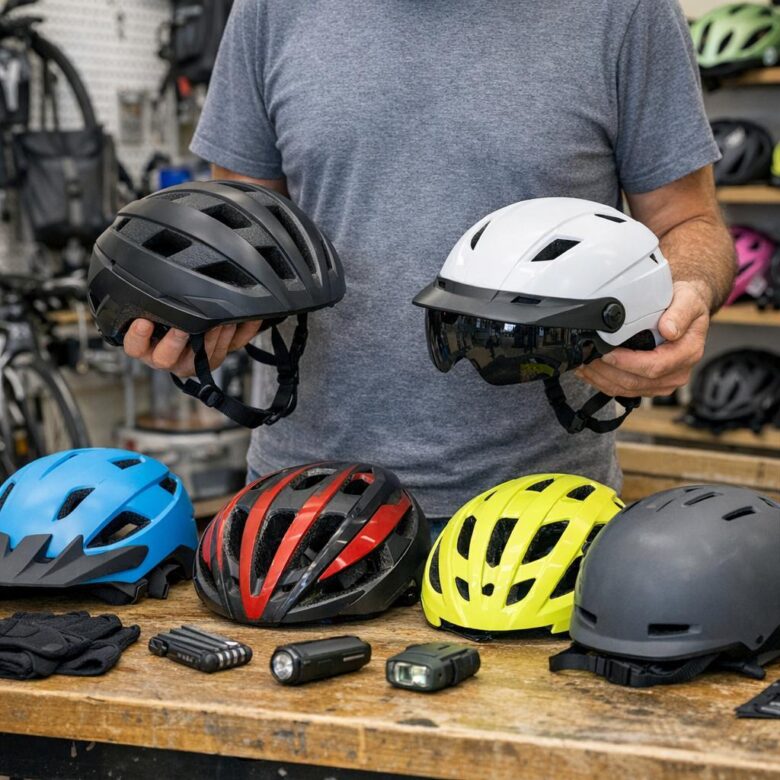
Another common issue is choosing the wrong helmet type for the riding you actually do. For example, a daily e-bike commuter riding in traffic may be better served by a commuter or urban helmet with extended rear coverage and built-in lights, rather than a lightweight road cycling helmet designed mainly for speed.
- Ignoring fit measurements: Use a soft tape measure and check the brand’s size chart before buying online.
- Keeping an old helmet too long: Replace it after a crash, visible damage, or when the foam becomes brittle.
- Not checking independent reviews: Tools like Virginia Tech Helmet Ratings can help compare impact performance beyond marketing claims.
A practical mistake I often see is riders tightening the chin strap to fix a poor fit. That usually means the shell size or adjustment system is wrong; the helmet should sit level, feel snug, and not rock forward or backward before the strap is fully tightened.
Also consider long-term ownership costs. Replacement pads, visors, rechargeable lights, and compatible accessories can affect the true helmet cost, especially for mountain biking, road cycling, or daily commuting safety gear.
The Bottom Line on Bike Helmet Buying Guide: How to Choose the Right Helmet for Safety and Comfort
Choosing the right bike helmet comes down to one clear priority: the safest helmet is the one that fits well, feels comfortable, and is worn every ride. Don’t buy based on looks alone-check certification, fit adjustment, ventilation, and how it feels after a few minutes on your head.
If you ride often, invest in a helmet suited to your riding style rather than settling for the cheapest option. A well-chosen helmet should feel secure without pressure points, stay stable when you move, and give you confidence every time you get on the bike.

Dr. Sterling Brooks is a Doctor of Mechanical Engineering (PhD) and a high-performance cycling consultant. He specializes in bicycle kinematics and structural integrity, applying advanced engineering principles to simplify complex bike maintenance. His mission is to provide cyclists with the technical expertise needed to ensure their gear is as efficient and reliable as the athletes who ride them.